You say
“Give a 10% discount to customers who insure both their car and their home.”
Plain business language, the way you already talk about your products. For example only.
LLMira Suite turns insurance product documents into live, auditable products.
Say what your product should do, in your own business words. AI agents build it, and your people approve every step.
“Give a 10% discount to customers who insure both their car and their home.”
Plain business language, the way you already talk about your products. For example only.
AI agents turn your words and your documents into rules, rates and forms, and show where each one came from.
Your analysts review and approve. The approved product runs live policies, with every rule traceable.

Move a product from approved documents to running policy in a fraction of the time legacy systems take. Keep every decision traceable for regulators and the board.
For executives →
Change a rate, a rule or a form without a ticket to a specialist. See exactly which document section every rule came from.
For business leaders →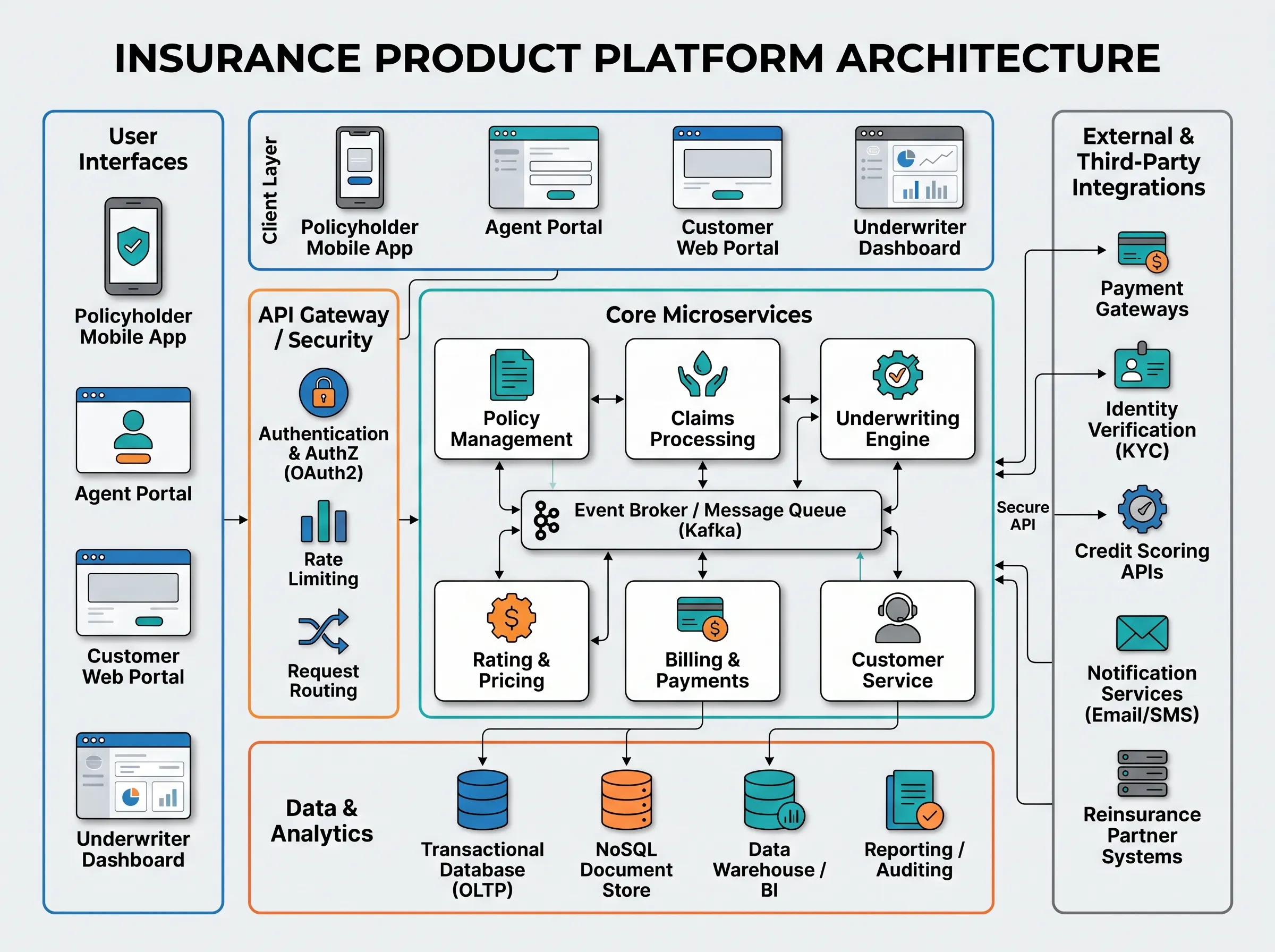
Open-source building blocks, an API-first design, open data and AI providers you can swap. Runs on the database, cloud and operating system you already use.
For technology →Every point of speed and cost matters when the margin is this thin.
One platform that reads your product documents, builds the product and runs it. Each orchestrator does one job well.
See every product →Reads your product documents and builds the product definition, with a person approving every phase.
Runs that product for quoting, rating, binding and renewals, on the version each policy was written on.
Lets insureds and agents create and manage policies on the same engine.
Routes work between people and AI agents with limits, approvals and service levels.
Before an insurer can sell a product, it submits its rates, rules and forms to the state regulator. That package is called a filing. LLMira Suite reads it and builds the product from it.
A rate manual, a rule change from your rating bureau (an ISO circular) or your own product documents.
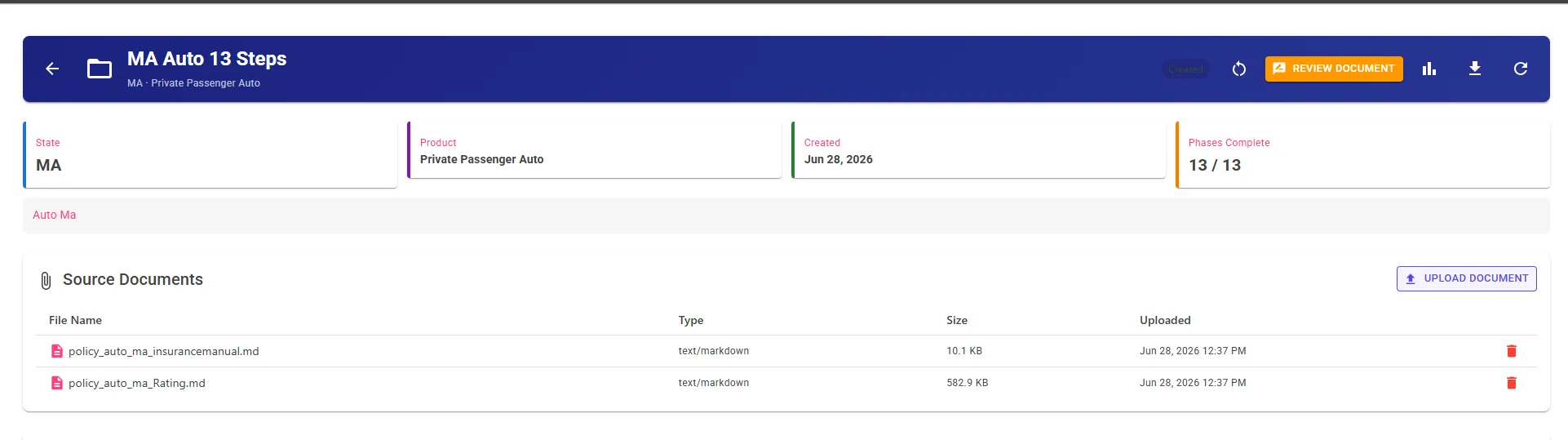
The AI agent drafts each phase and checks its own work; a person approves before it moves on.
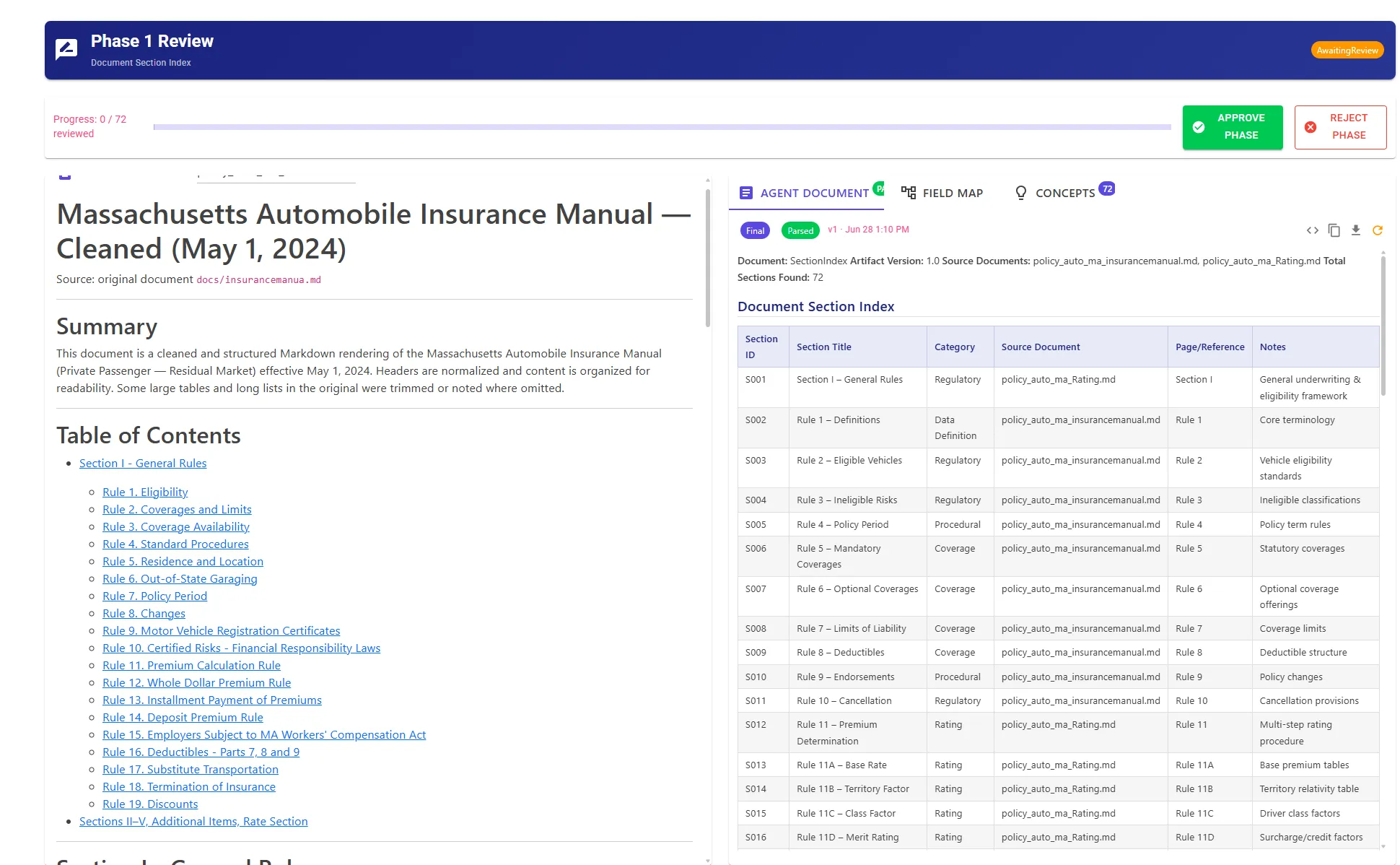
The approved product definition drives the forms, the rating and the audit trail.
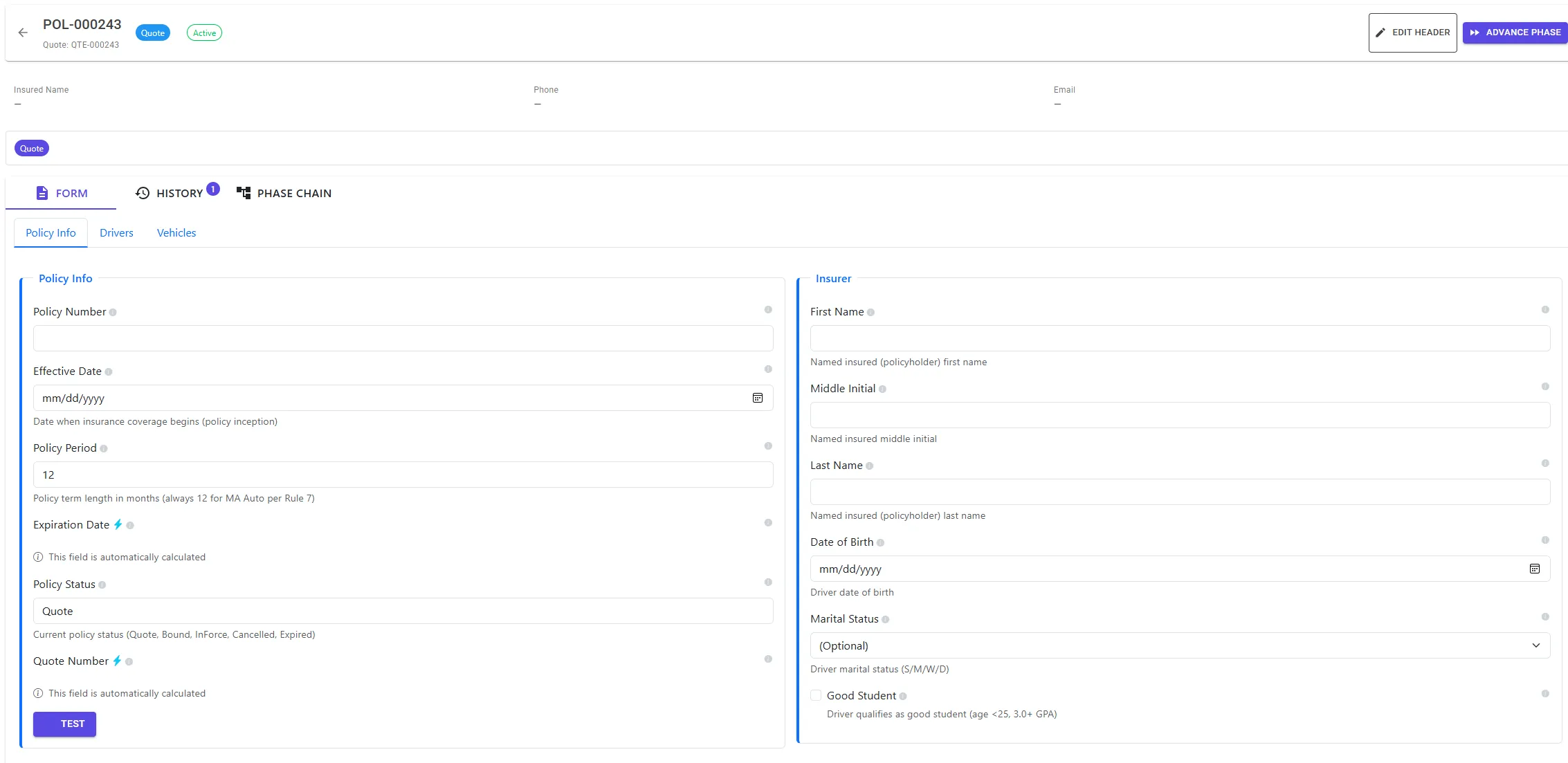
Each rule links back to the document section that required it. Answer "where does this come from?" without calling a senior analyst.
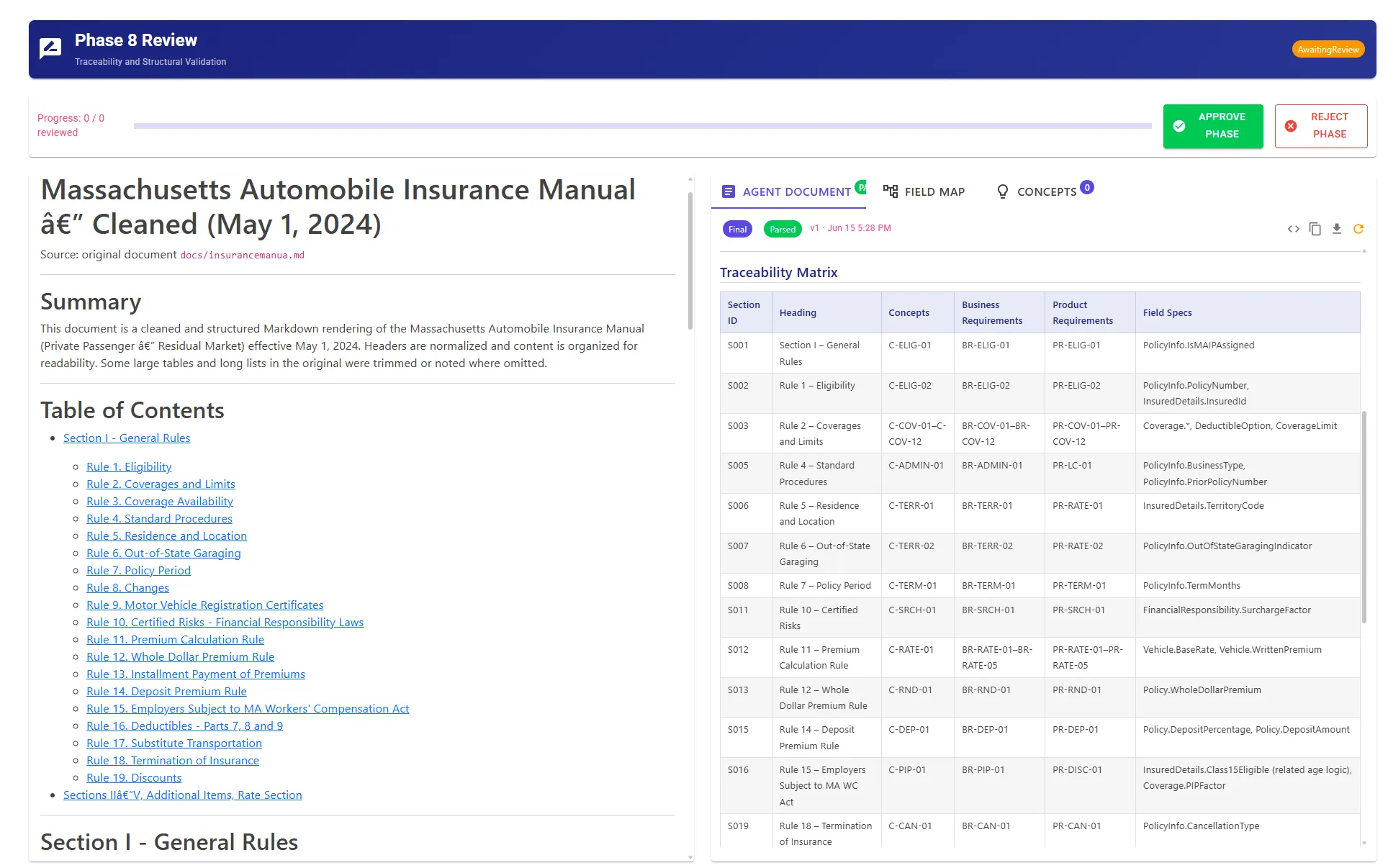
You define the phases, from document index to final product, with a person approving every gate.
AI agents do the reading and drafting; analysts keep the decisions. Rejection notes feed the next run.
A policy always runs on the version it was written on. Production definitions are protected at the database.
Rules are stored with the product and tested one rule at a time. A rule change is a product update.
Underwriter and client screens are generated from the product. Change a rule and every form follows.
Inheritance is used where it helps, not everywhere. Auto and Homeowners snap together as blocks into one product, and each version carries only the rules that changed. See how →
A typed API serves broker portals and embedded channels. Swap the AI provider with configuration.
 Azure OpenAI
 OpenAI
 Anthropic Claude
 DeepSeek
 Kimi
 Gemma
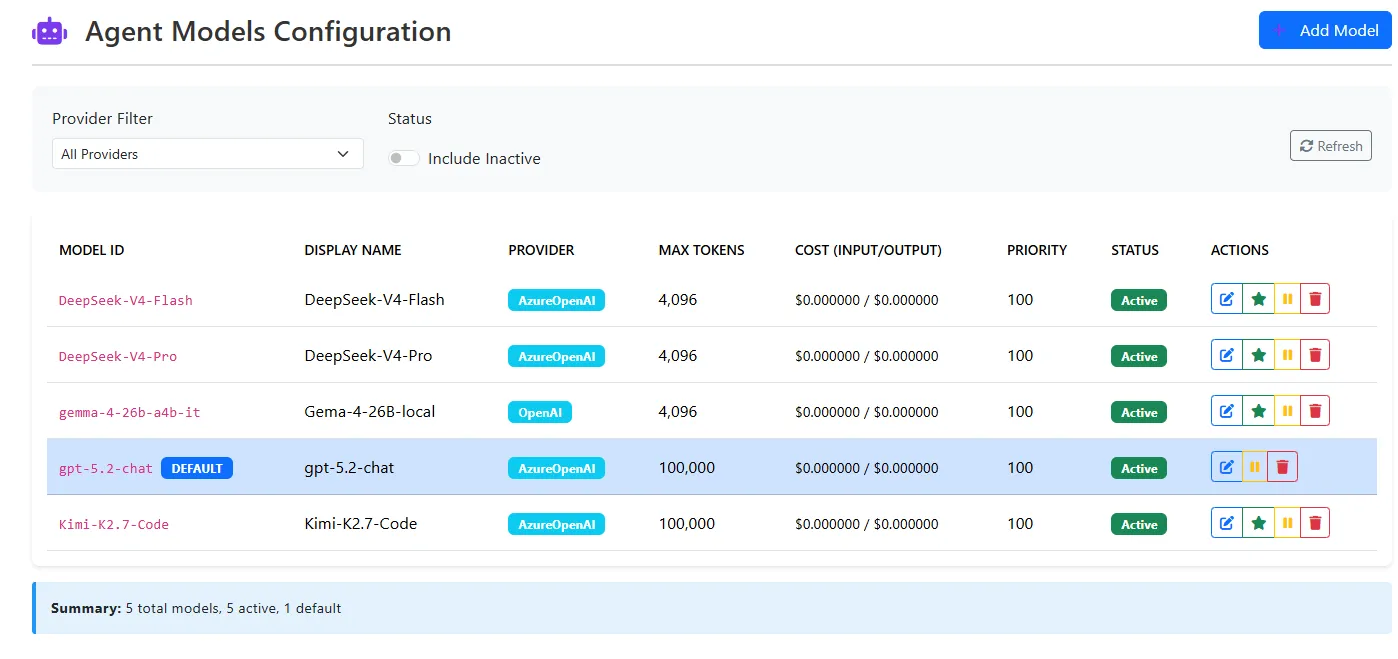
Azure OpenAI, Azure AI Foundry and Anthropic Claude, by configuration.
A rating bureau (ISO) publishes a change to Personal Auto rating in Massachusetts, effective 1 March 2026. Upload the PDF, approve the extracted factors, and the new product version goes live for new business while renewals stay on the old one. No developer writes business logic.
Microsoft AzureAzure OpenAI Azure AI FoundryAnthropic Claude
 AWS
 PostgreSQL
 MySQL
 Oracle